

Data-driven. Meticulous. Analytical. All adjectives that have been used to describe me. And my approach to decision making is certainly no exception. Which for big life decisions can be quite an asset. Research and color-coded spreadsheets pave the way to logical and confident decision-making. However, when it comes to making smaller, quicker, every day decisions, this approach can lead to anxiety, over-analysis, and even decision paralysis. There’s simply too much data, and not enough time.
This has never been more true since becoming a parent, especially when you layer in the complexity around making decisions as a new parent during a global pandemic. Reflecting on the last few years (my kids are now 2 and 4), I think the biggest factors that have made decision-making so challenging as a new mom are the quantity, the unprecedented weight, and the overwhelming amount of data inputs.
Death by a thousand decisions
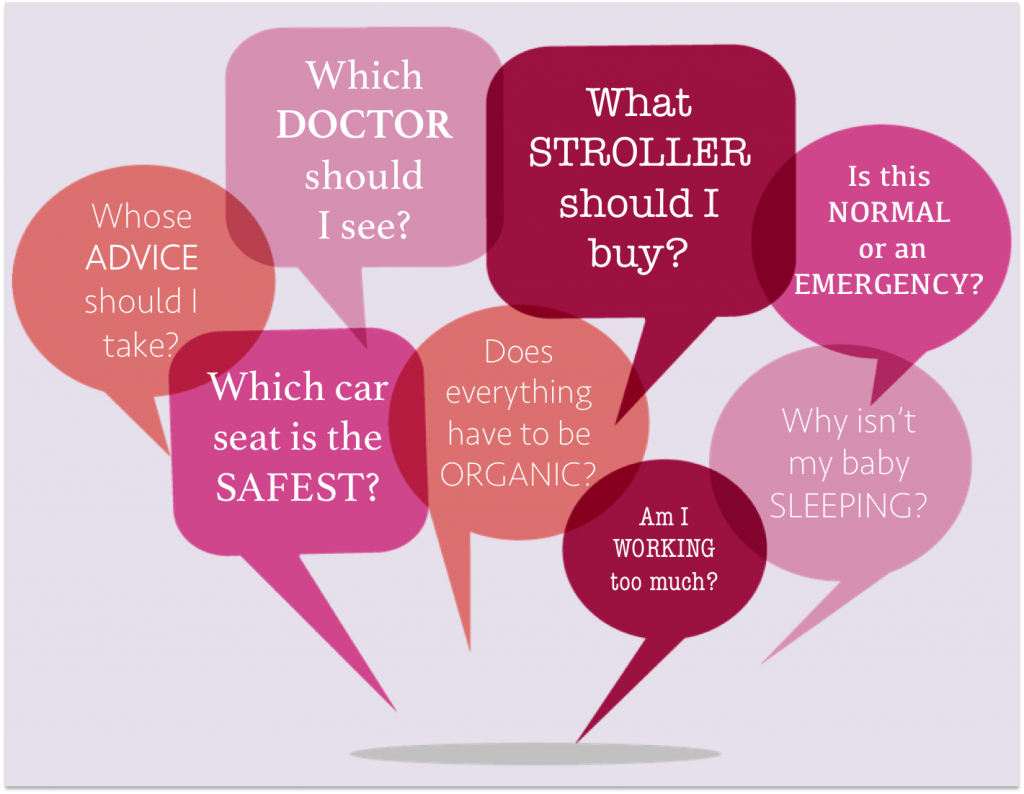
I knew that becoming a parent I would have some new and important decisions to make. But I was woefully underprepared for the sheer quantity of decisions I would need to make, big and small. For the first time in my life, I felt like I truly experienced decision fatigue (which is exactly what it sounds like.)
Things only got worse once my daughter started talking. For an insightful look at what I mean, check out this blog post from several years ago, when a mom decided to capture every decision her kids made her make in one day. Spoiler alert: it was A LOT.
While it’s normal and unsurprising for toddlers and young kids to inundate their parents with questions, I don’t think I really understood just how many questions there would be. More specifically, how many decisions there would be.
At a time when I was already stretched as thin as I could go, the mental exhaustion from making so many new decisions was almost untenable at times.
A newfound weight to decisions: parenting and a pandemic
March 2020 was the beginning of a huge paradigm shift for me in my decision making processes. Not only was I making decisions based on personal safety during a global pandemic, but at that time I was 2 months pregnant with my first child. I’ve often struggled to mentally tease apart some of the impacts of the pandemic vs. becoming a parent, but I do think they both bring a unique weight to decision-making.
For the first time in my life, I was making decisions for someone else. While many decisions we make as adults impact the ones we love, parenting is a unique burden of making decisions FOR the ones you love. This was, for me, an unprecedented burden that made every decision feel extra heavy.
While the intensity of the pandemic and the impact of COVID are slowly fading, I was making some of the most important decisions of my life while it was at it’s peak. Instead of worrying about what color to paint the nursery (which to be honest, I probably spent too much energy worrying about as well), I was wrestling with “will going outside harm my unborn child?”, “who do I want in the room with me for birth (only one person allowed)”, and “what precautions do we need to take before introducing our baby to family?” The sheer weight of every move I made during peak pandemic accelerated the decision fatigue, and challenged me in ways I could not have anticipated.
TMI: Too Many Inputs
As someone who is known for their color-coded spreadsheets, usually I would say the more data available to make a decision, the better. But my inaugural years in parenthood have clearly impressed upon me the reality that there is such a thing as too much data.
While every generation has had plenty of competing inputs (your gut, your parents, your in-laws, your pediatrician, your friends) the age of smartphones, google, and social media increases those inputs exponentially. At times, this speedy access to people and information has been a huge asset. Being able to look up tips on soothing a screaming infant at 3 AM from the palm of my hand. FaceTiming my mom to get some sage advice when I’m at my wits end. Texting photos of dirty diapers to my nurse sister (sorry Sara!) asking “is this normal??”
However more often than not, the temptation to double check your gut against “Dr. Google” was irresistible. Advice from strangers, influencers, and celebrities was funneled into my feed, whether I asked for it or not. And for every question that felt straight forward, there was contradictory advice online that left me more conflicted and confused than before.
As I type this I feel the irony with every stroke of the keyboard. Isn’t this just adding to the noise for fellow parents? Honestly, maybe. But that brings us to the silver lining of the digital age. In the sea of tweets, reels, and posts (solicited or not), is the opportunity to feel connected. The chance to see yourself in someone else’s story, and know that you are not alone.
So my sincere hope is this: that this story reaches one mentally exhausted parent out there who feels seen because of what I’ve shared. Who, by having their reality validated, experience a modicum of relief. Because at the end of the day, parenting is a human experience. And while every journey is unique, we’re all in this together.
 Parenting While Human
Leave a comment